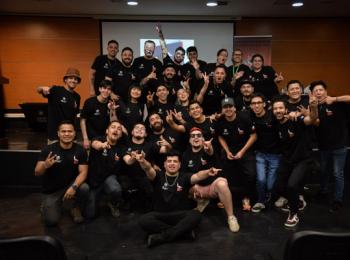
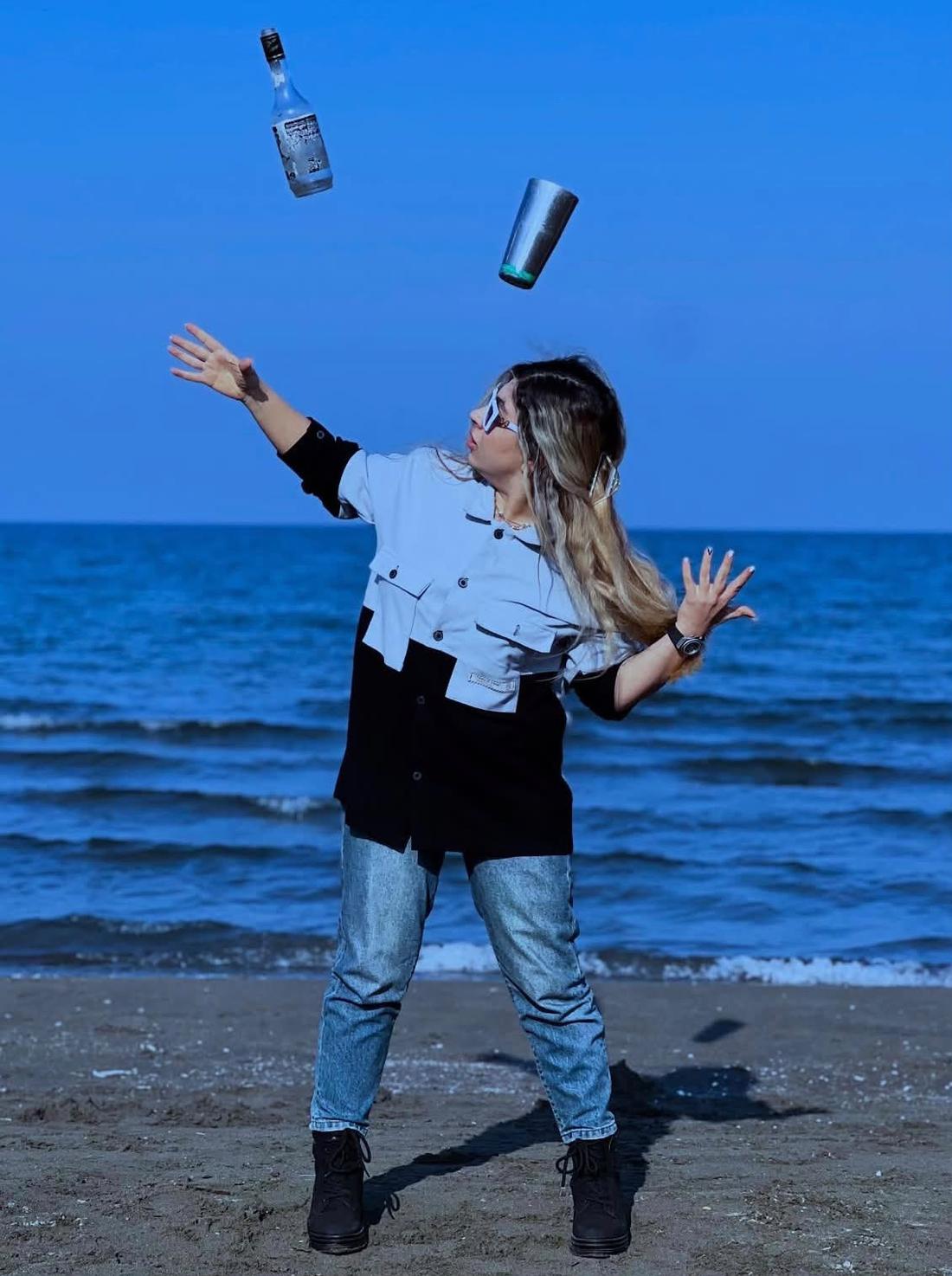
The World Flair Association is proud to celebrate a landmark achievement: Hasti Azimi, an Iranian flair bartender based in Tehran, has become the first woman to attain the prestigious WFA Blue Grade.
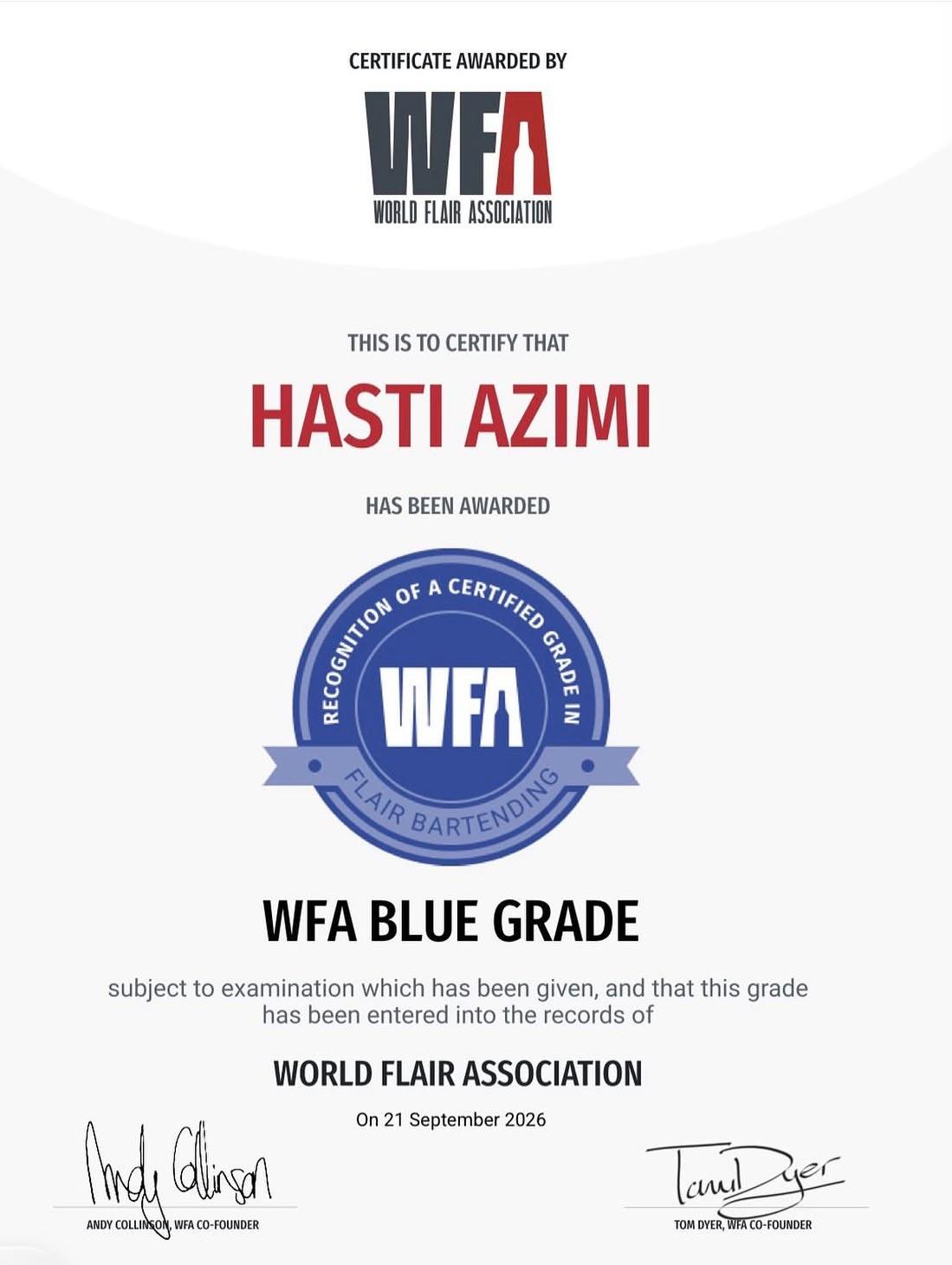
Her achievement represents far more than the successful completion of an examination. It is an important moment for women in flair bartending and an inspiring demonstration of what can be accomplished through dedication, perseverance and professional ambition—even when the path is filled with extraordinary obstacles.
“For me, achieving the WFA Blue Grade is not just a personal achievement,” Hasti explains. “I wanted to show that flair bartending is not just for men and that women can also shine in this discipline. I hope my journey inspires more girls to believe in themselves and go after their goals.”
A Journey That Began at Flair House Iran
Hasti began her flair bartending journey at Flair House Iran, where she learned the discipline from the ground up.
It was there that she developed her technical foundation, strengthened her confidence and gradually grew into the flair bartender she is today. For the past four years, she has trained under Aria Sohrabi, founder of Flair House Iran and an official WFA examiner.
If she had to identify one person who has had the greatest influence on her journey, there would be no hesitation.
“My dear mentor, Aria Sohrabi, has supported me in every situation and at every stage of my journey—from helping me when I struggled with tuition fees in the beginning to supporting me on national competition stages and throughout my WFA Grades,” she says.
“I owe so much of my progress to him. I am truly grateful for the opportunity to thank him and recognise him as my lifelong mentor and role model.”
Two Months of Focused Preparation
Preparing for the WFA Blue Grade required two months of disciplined and highly structured training.
Alongside her flair ambitions, Hasti manages the bar at a busy café-restaurant, working long and demanding hours. With limited time available, she transformed her two-hour break in the middle of each working day into an intensive training session.
She memorised the required routines, wrote down the sequence of every movement and repeatedly practised behind the bar. After each attempt, she compared her execution with the sequences she had prepared, correcting mistakes and refining every detail until she felt ready for the examination.
Her preparation often continued long after her working day had ended.
“Because of my work schedule, I often had to train from late at night until the early hours of the morning—in the heat, cold, rain and even snow,” she recalls. “It was also difficult to train in public places because many people didn’t understand what I was doing. But none of these challenges stopped me from working hard and continuing to pursue my goals.”
Mastering the Most Difficult Move
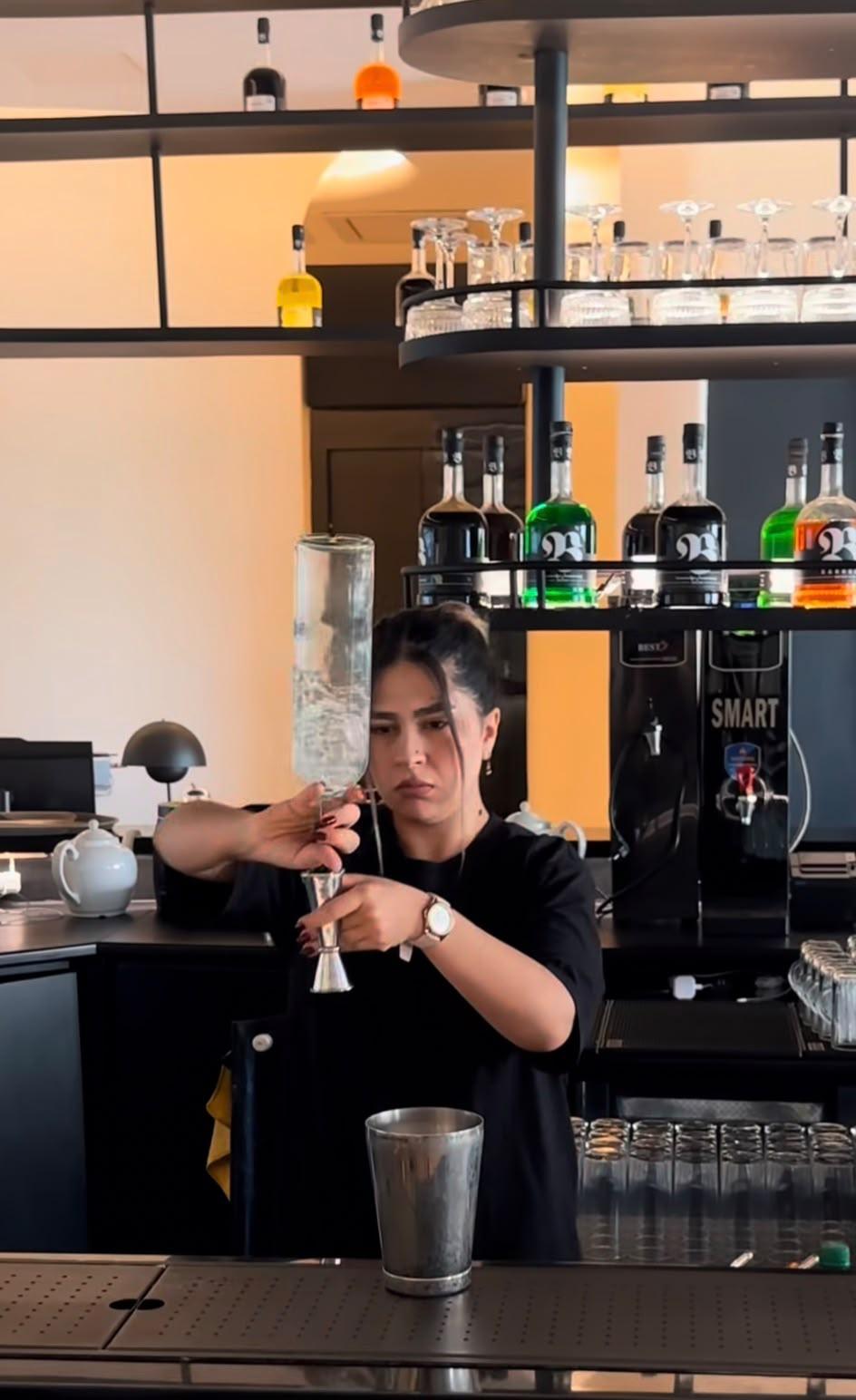
Every WFA Grade presents new technical challenges, and one movement proved particularly demanding: the final move involving a glass and bar spoon stalling together on the wrist.
It was a technique Hasti had never attempted before.
“The final move was the most challenging for me,” she explains. “It was both interesting and difficult, and it took me longer to master than the other moves.”
Through repetition, patience and careful technical work, she eventually transformed an unfamiliar movement into part of a successful Blue Grade performance.
Her approach offers an important lesson to anyone progressing through the WFA Grading System: improvement does not depend on immediately succeeding at every movement. It comes from studying the technique, accepting mistakes and returning to the move until it becomes consistent.
Overcoming Obstacles Beyond the Bar
The physical and technical preparation was only one part of the challenge.
Because of the international restrictions affecting Iran, arranging payment for the WFA examination required assistance from outside the country. The process became even more difficult during a period of conflict, when access to the internet was unavailable for an extended time.
These circumstances created barriers that many flair bartenders elsewhere may never encounter. Nevertheless, Hasti remained focused on her goal and found a way to keep moving forward.
Her success is therefore not only a reflection of her flair ability. It is also evidence of her resourcefulness and determination in overcoming circumstances outside her control.
Creativity Within Iran’s Non-Alcoholic Bar Scene
Today, Hasti works at Hills Bar in Tehran, where the team specialises in creating non-alcoholic drinks.
The bar was established and its menu designed by Sohrab Eskandari, widely regarded within the local community as the father of beverage science in Iran. He is also Hasti’s mentor in mixology and flavour profiling.
His approach demonstrates how limitations can become a source of creativity. By using non-alcoholic ingredients and advanced mixology techniques, he can recreate complex flavour profiles traditionally associated with spirits such as gin and whiskey.
“Iran has its limitations, but he knows how to turn those limitations into creativity,” Hasti explains. “I believe the mocktail scene in Iran is growing, and there is a lot of talent and innovation in it.”
This developing culture combines technical mixology, creative flavour construction and performance—giving bartenders opportunities to create memorable drinking experiences within Iran’s unique environment.
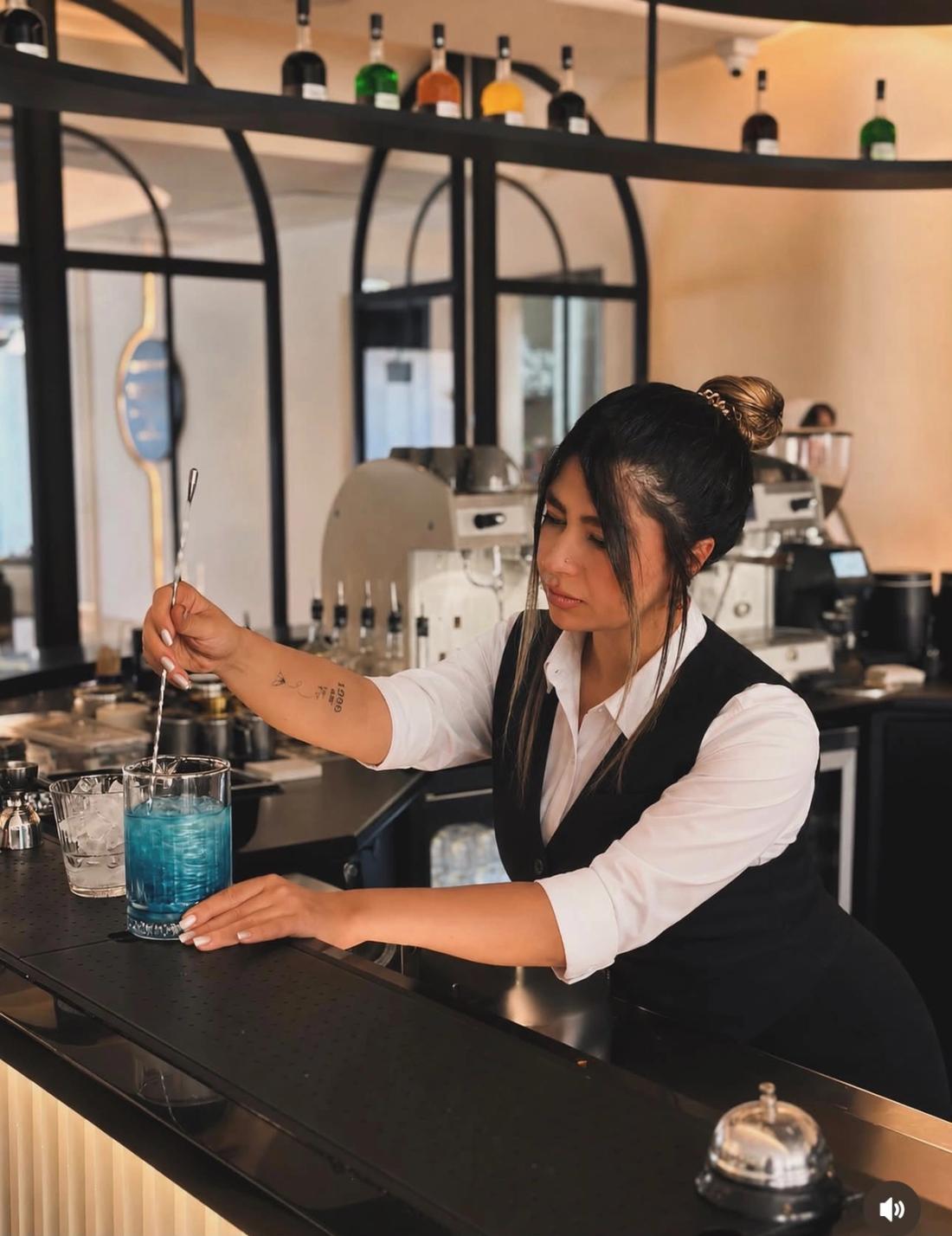
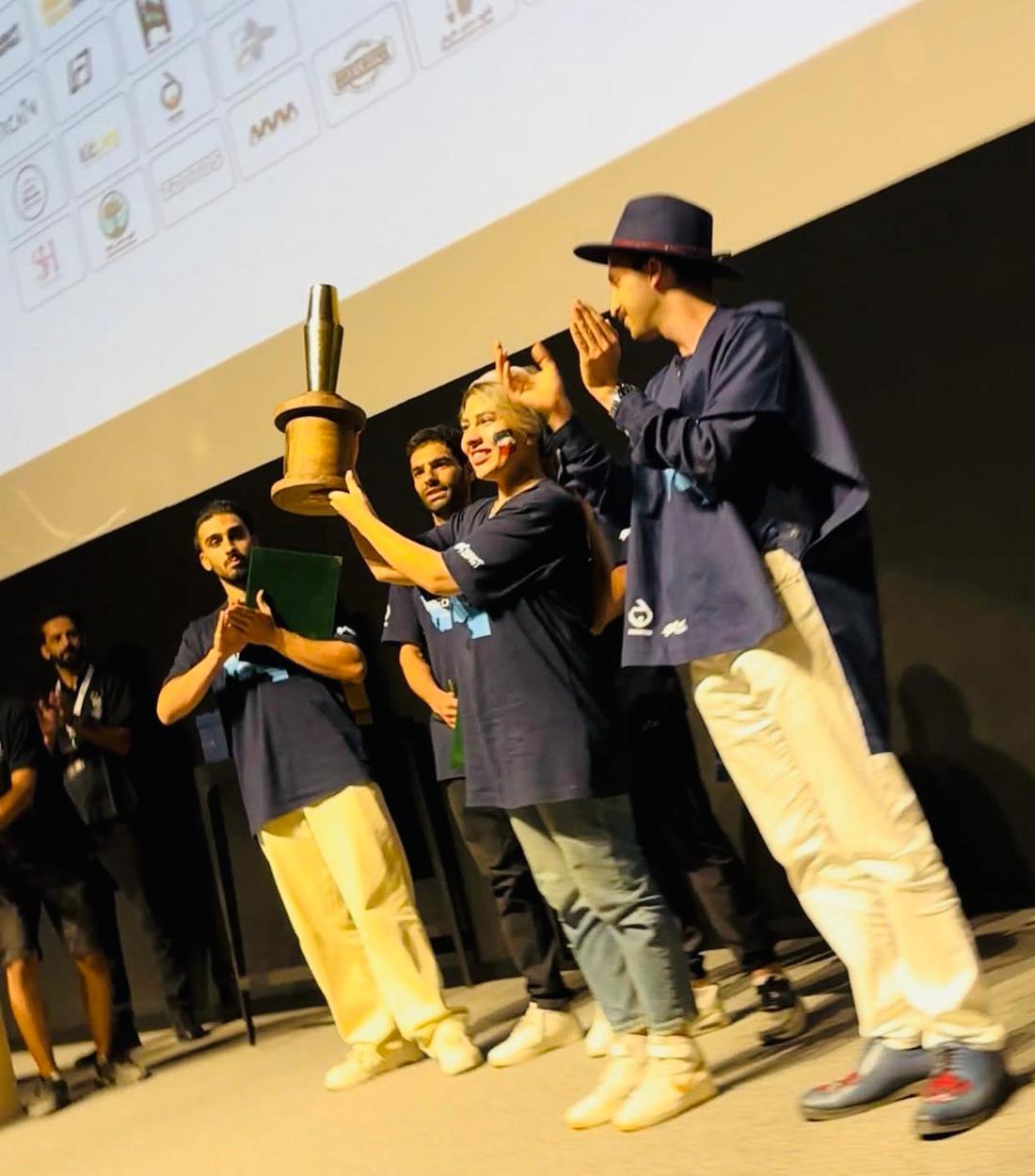
During the 2025 Persian Gulf Mixology & Flair Bartending Competition, Hasti participated as the first and only female competitor from Iran. I was incredibly proud to receive the award for Best Drink of the Competition with my signature creation, Fooman.
The cocktail celebrates authentic Iranian flavours, with fig and saffron at its heart. Its overall flavour profile was inspired by the rich sweetness of Koloucheh Fooman, a traditional pastry from northern Iran.
Fig purée is combined with pineapple juice and vanilla syrup, then topped with a delicate saffron and coconut foam. Caramelized walnuts and saffron threads complete the presentation, adding texture, aroma and a distinctly Persian character.
Cocktail Recipe
Glass: Coupe
Ice: None
Ingredients
• 2 bar spoons fig purée
• 12 cl pineapple juice
• 2 cl Vanilla syrup
Saffron-Coconut Foam
• 1 part milk
• 1 part cream
• 2 cl coconut syrup
• 4 cl brewed saffron
Garnish
Caramelized walnuts and a few saffron threads.
The PBL National Mixology and Flair Bartending Competitions are held annually by the Barhos Team and Flair House Iran, providing an important platform for bartenders to demonstrate their creativity and technical abilities. At last year’s competition, the champion received prize money of 500 million tomans, equivalent to approximately US$2,500.
A Message for Women and Young Bartenders
As the first woman to earn the WFA Blue Grade, Hasti hopes her achievement will encourage other women and young bartenders in Iran to pursue their ambitions.
“I want my journey to show them that they can believe in themselves and pursue their dreams, even when the path is difficult,” she says. “With passion, hard work and persistence, you can achieve things you once thought were impossible.”
Her advice to aspiring flair bartenders is simple but powerful: remain patient, practise consistently and measure progress against your own development rather than comparing yourself with others.
“Don’t be afraid of making mistakes during training. Learn from them and keep going. Most importantly, trust yourself, maintain a high level of professionalism, and always protect your personal image and reputation.”
Looking Towards the International Stage
Having made WFA history, Hasti is already focused on the next chapter of her journey.
Her ambition is to participate in international flair bartending competitions, gain experience alongside competitors from around the world and achieve strong results on the global stage. She also hopes to continue working with the World Flair Association and developing as a professional.
However, international travel remains a significant challenge for many Iranian bartenders. Hasti hopes that visa and travel opportunities will become more accessible in the future, allowing Iran’s flair and mixology talent to participate more freely in international competitions and industry events.
Her Blue Grade is therefore both a personal milestone and a statement of possibility.
From training late at night in difficult conditions to overcoming payment restrictions and prolonged internet disruption, Hasti refused to allow circumstances to define what she could achieve. Her journey reflects the values at the heart of flair bartending: creativity, discipline, courage and the determination to keep going after every setback.
Today, Hasti Azimi stands as the first woman to achieve the WFA Blue Grade.
Tomorrow, she hopes to stand on international competition stages—and inspire many more women to follow her.
Andy Collinson WFA Co-Founder added:
Flair bartending knows no borders — it doesn’t divide people; it brings them together, building community, respect, and unity.
The WFA Team